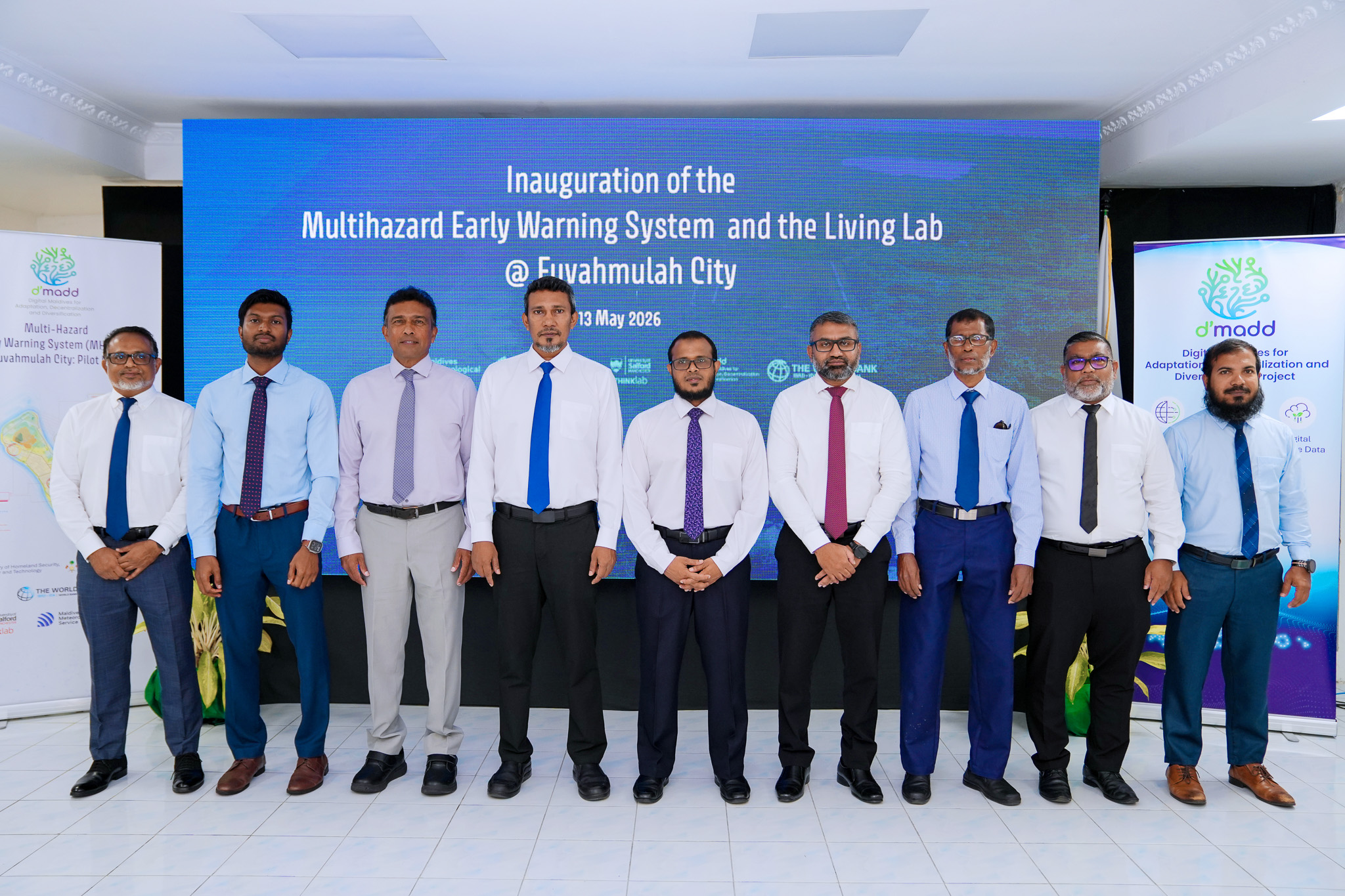
D’MADD Project Launches Innovative Multi-Hazard Early Warning System, Mobile App “UDHA” and Living Lab in Fuvahmulah City
13 May 2026
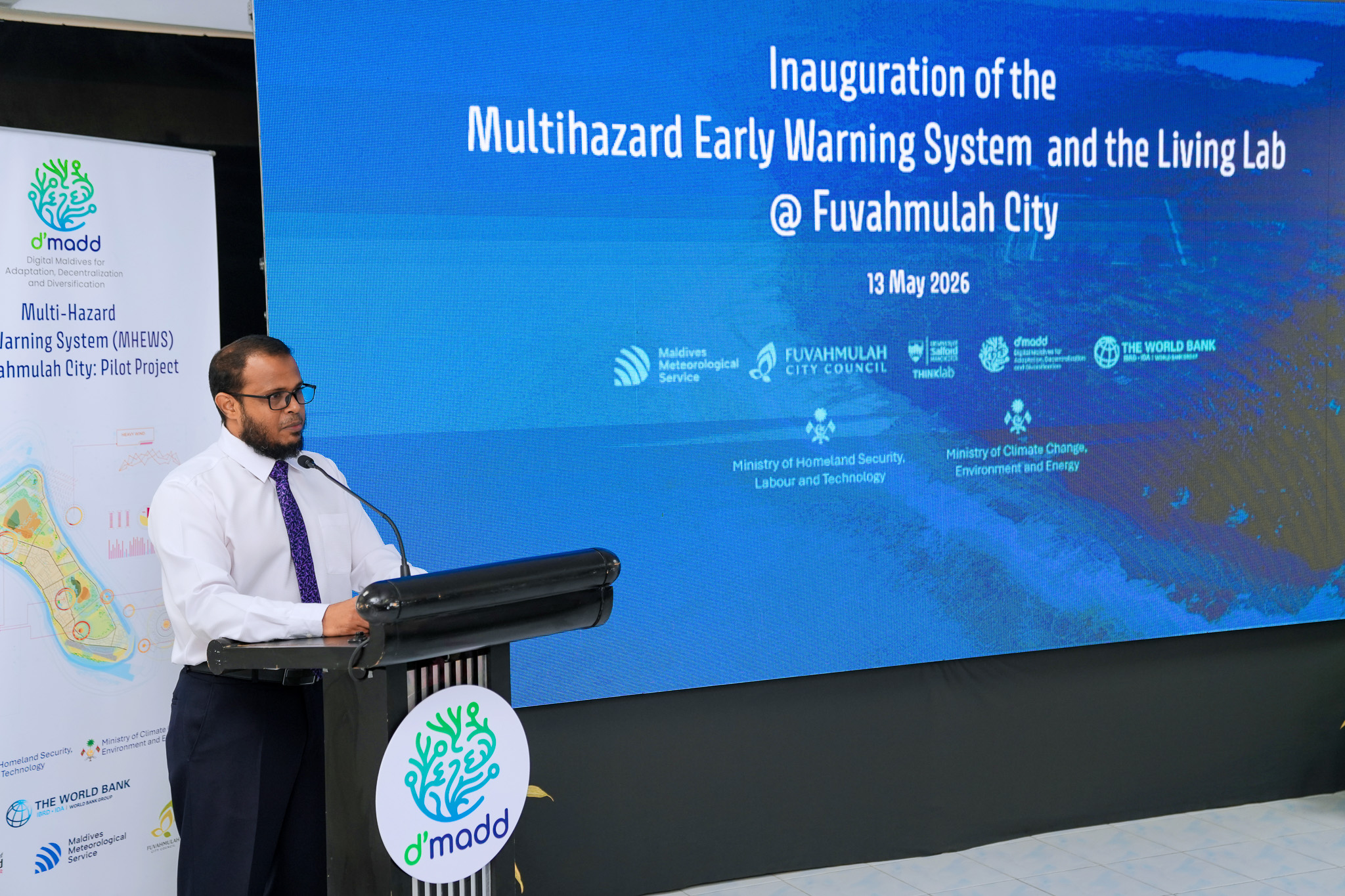
The
Digital Maldives for Adaptation, Decentralization and Diversification (D’MADD)
Project has officially inaugurated the Impact-Based Multi-Hazard Early Warning
System (MHEWS, Mobile app and Living Lab in Fuvahmulah City. The landmark
launching ceremony took place today at the Fuvahmulah City Hall.
The
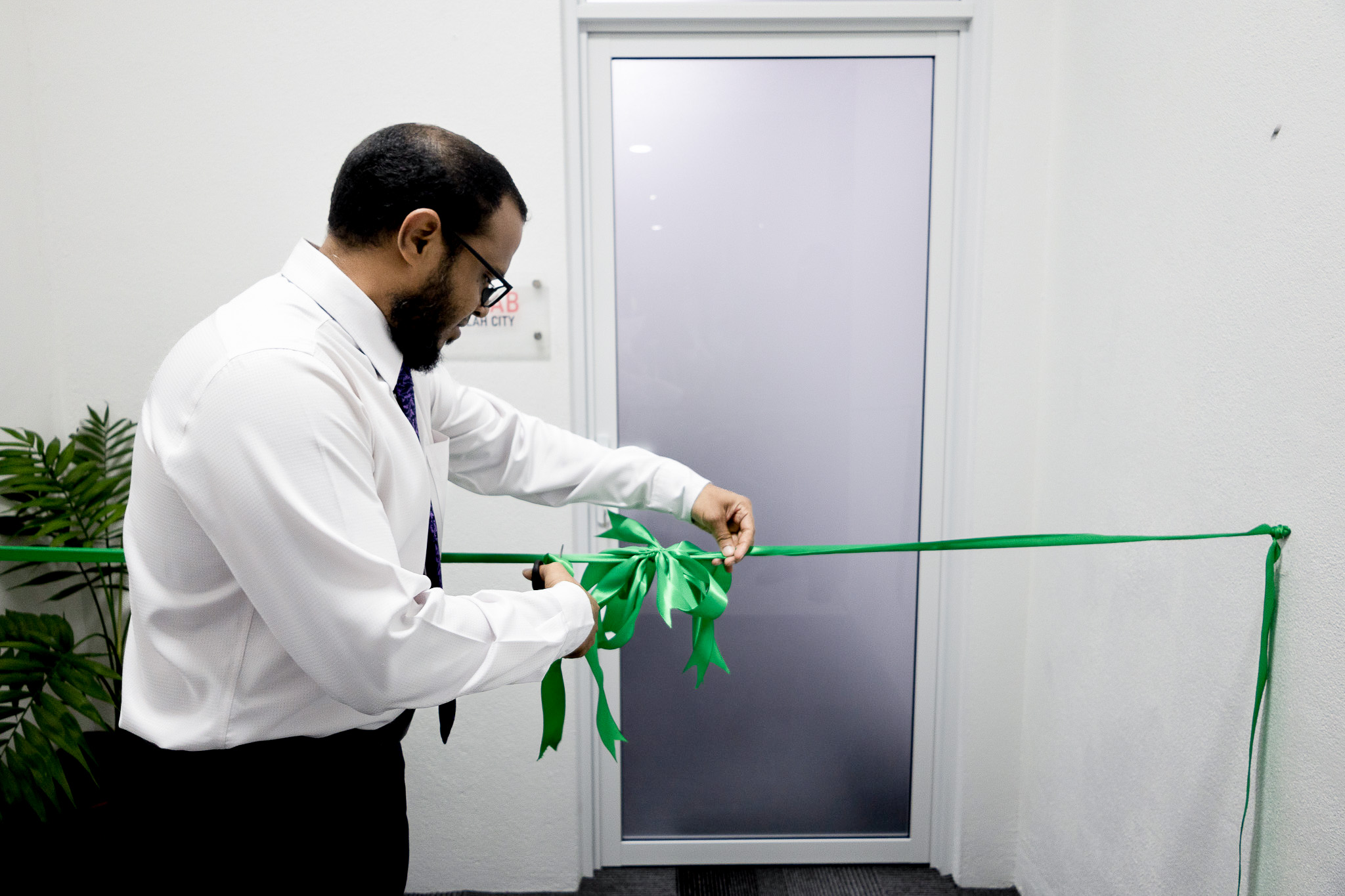
MHEWS platform, mobile app “UDHA” and Living Lab was officially inaugurated by
the Chief Guest, Minister of Climate Change, Environment and Energy Honourable
Ali Shareef, alongside key remarks delivered by Mr. Ismail Rafeeq, Mayor of
Fuvahmulah City. To ensure long-term sustainability and solidify local
collaboration, the event also featured the signing of a Memorandum of
Understanding (MoU) between the Maldives Meteorological Service and the
Fuvahmulah City Council.
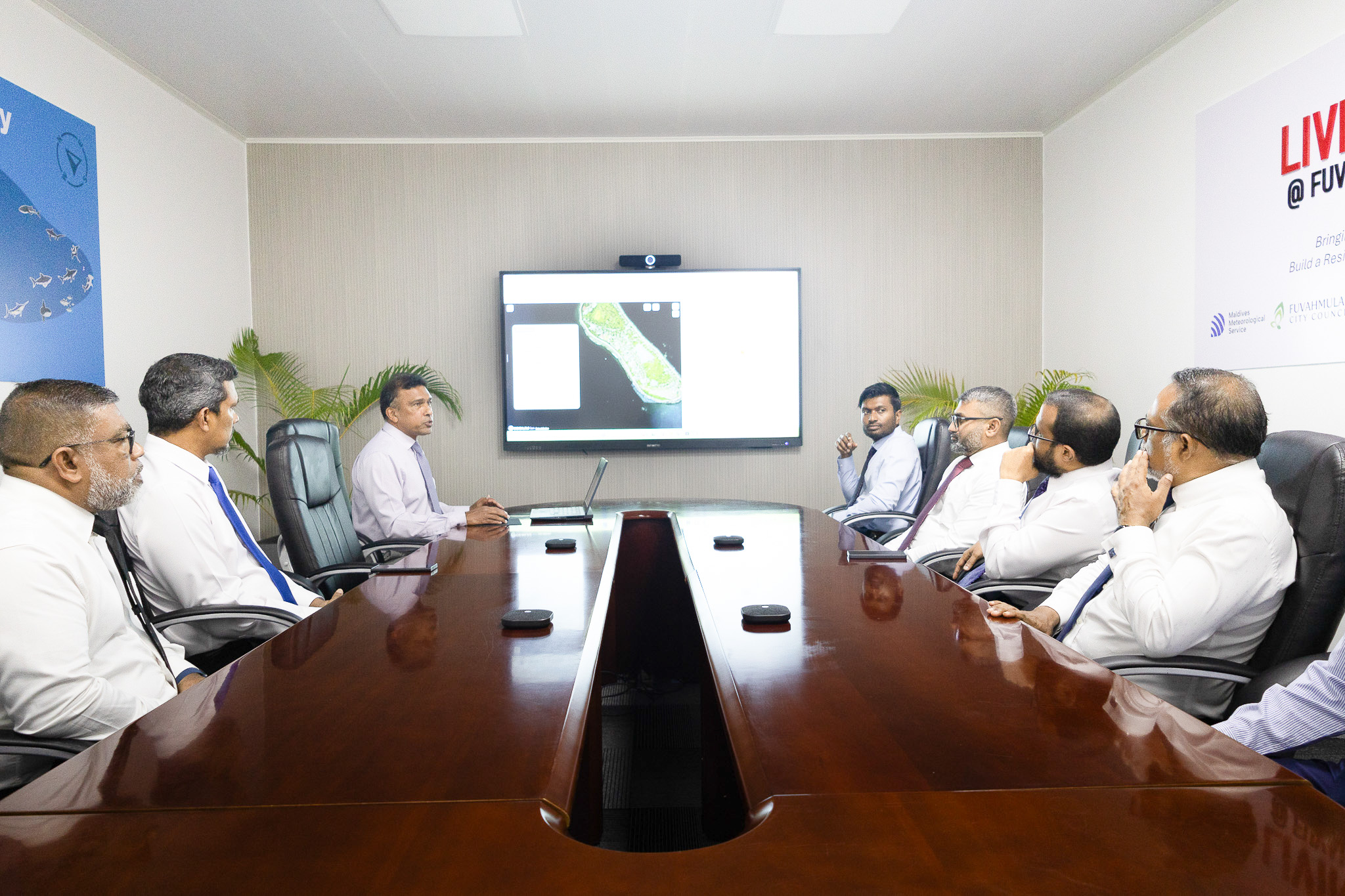
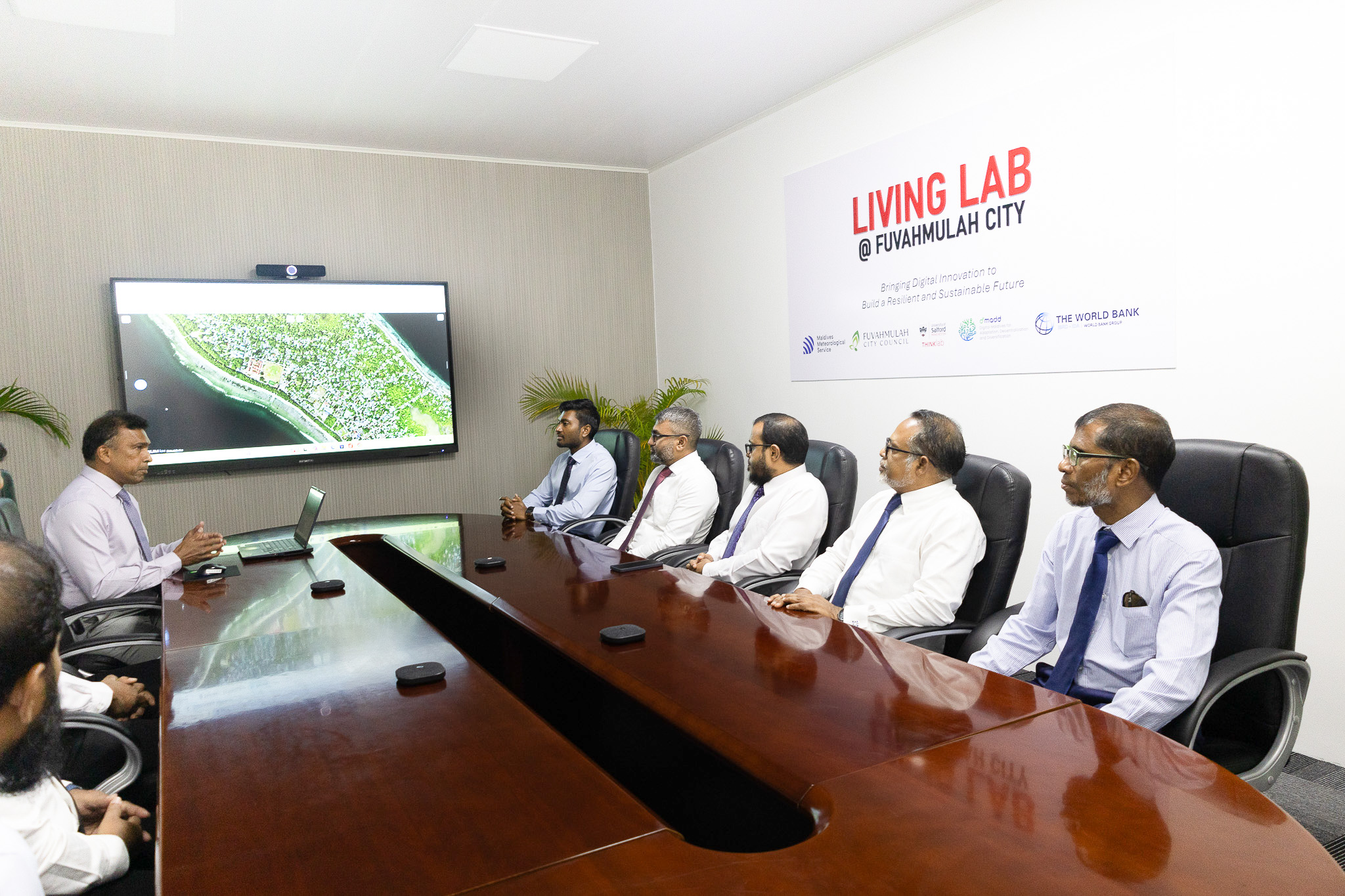
The
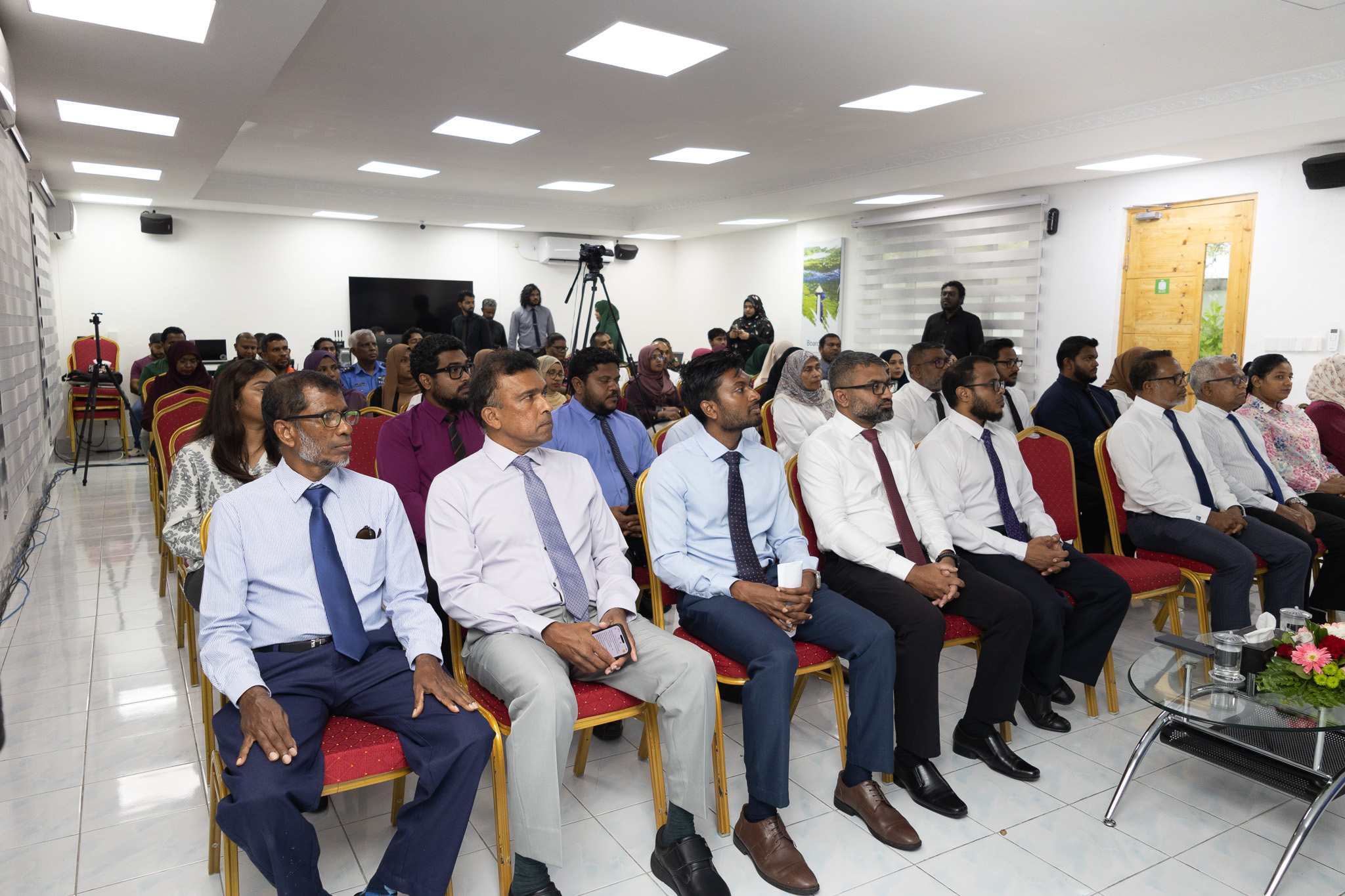
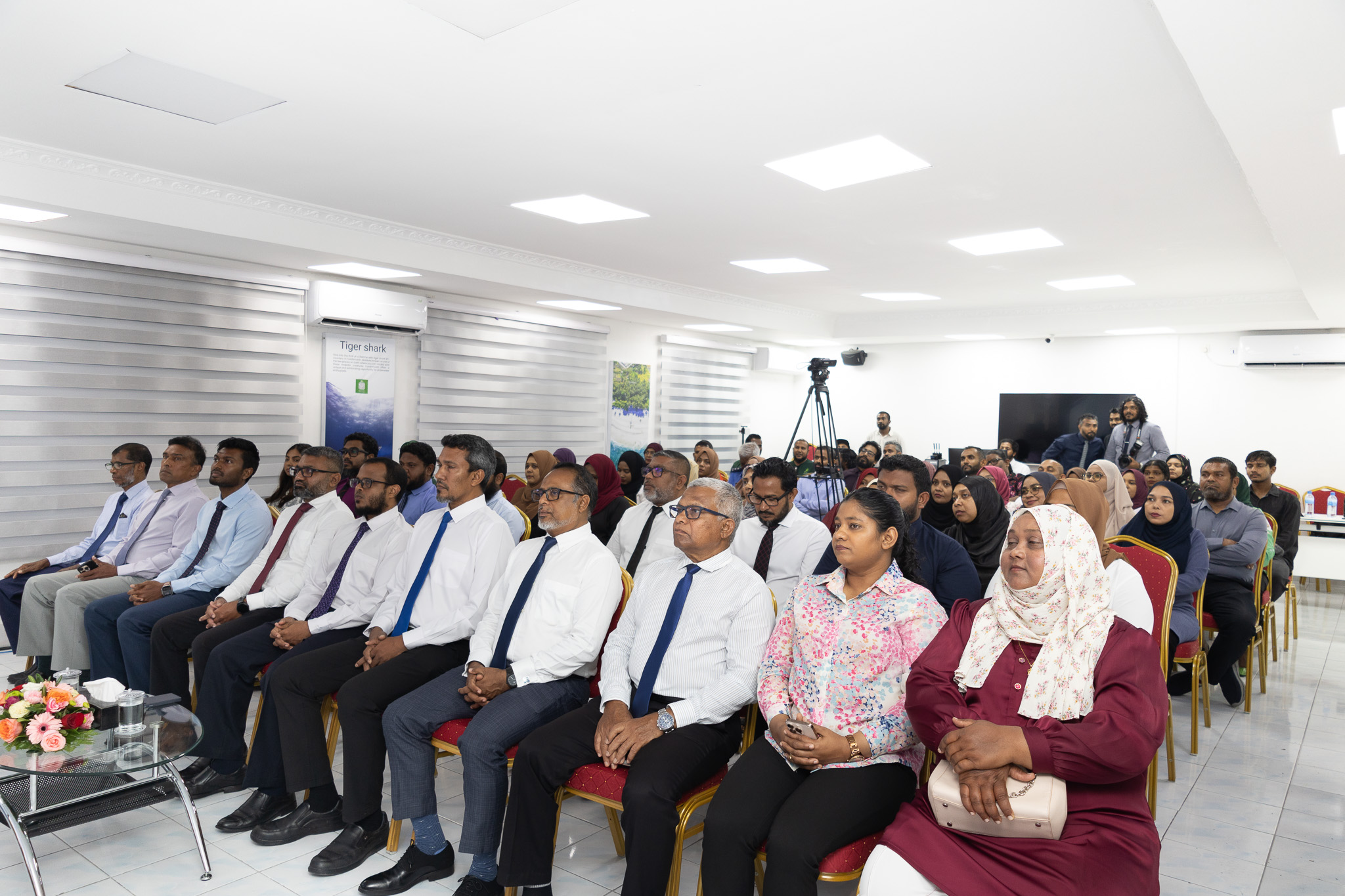
Living Lab established at the Fuvahmulah City Council acts as the centralized,
community-driven operational hub for the newly launched Multi-Hazard Early
Warning System (MHEWS). This
localized facility bridges the gap between advanced digital technology and
real-world climate adaptation. Rather than operating as a detached technical
mechanism, the lab provides a collaborative space where municipal authorities,
national disaster management agencies, and meteorology experts by empowering
local institutions to independently manage and sustain these early warning
systems, the lab creates a resilient disaster-preparedness framework that can
be scaled across other fragile atolls in the Maldives.
Built on an advanced digital
infrastructure, the cloud-based decision-support system was developed by the
University of Salford (UK), serving as the project’s scientific and technology
partner. MHEWS is designed to enhance community resilience against natural
hazards by offering real-time risk assessment, early hazard detection, and
streamlined emergency communications.
To
protect vulnerable coastal communities, the platform introduces four core
digital solutions developed by the university's MOBILISE team:
1. Risk Knowledge and Impact Analyser
2. Monitoring and Forecasting Platform (Eagle-I)
3. Early Warning Dissemination Platform (BConX)
4. Citizen App "Udha"
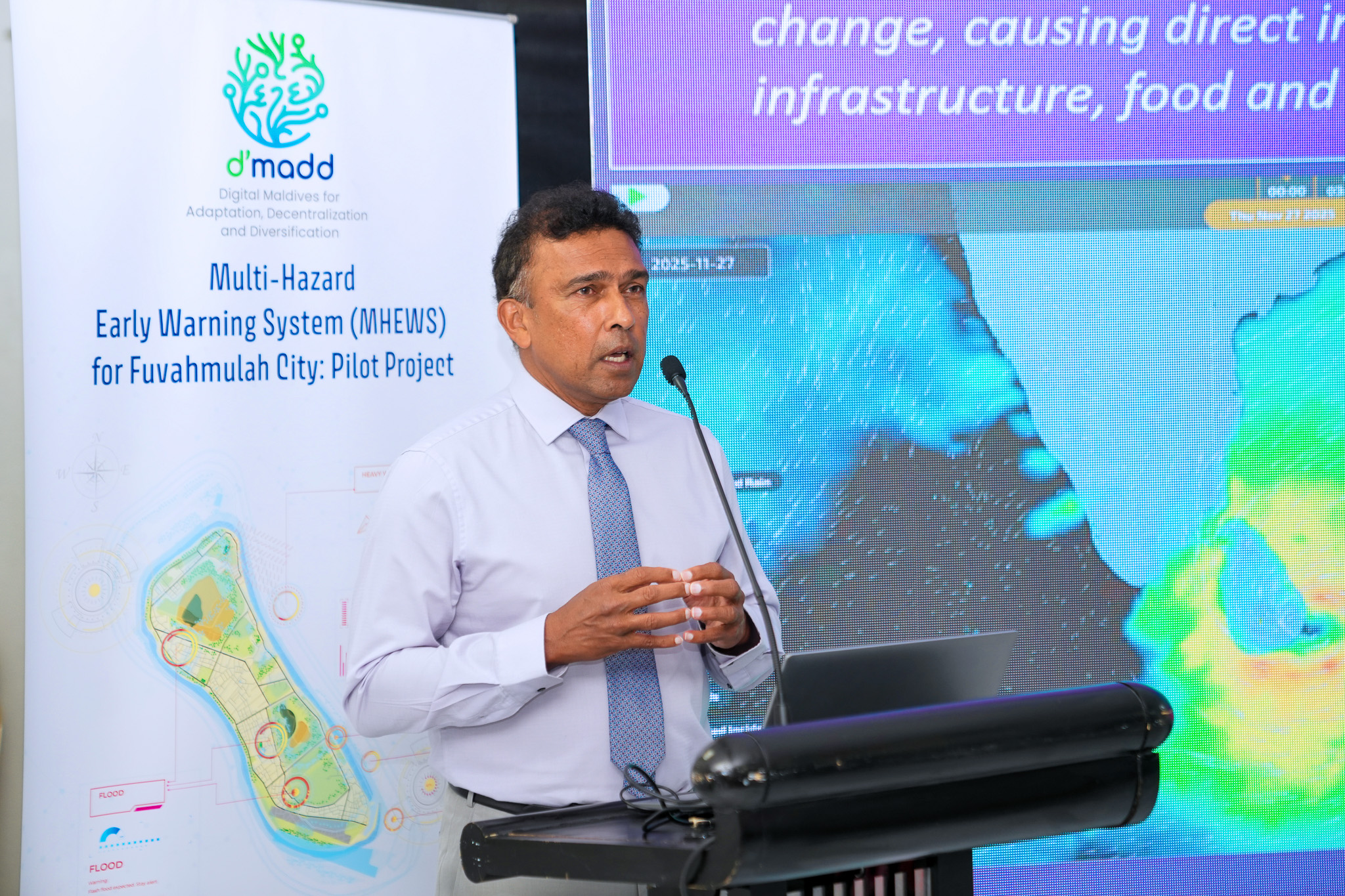
During
the inauguration, Professor Terrence Fernando from the THINK Lab at the
University of Salford provided a technical overview of the platform. He
emphasized how the system successfully bridges the gap between complex
scientific data and proactive, local action.
In
his address to the attendees, Minister Ali Shareef emphasized a critical
paradigm shift toward impact-based forecasting. He noted that the Maldives must
move beyond simply predicting the weather to deeply understanding its real,
tangible impacts on people's lives and livelihoods. Drawing on international
frameworks, Minister Ali Shareef highlighted that open data sharing, local
capacity building, and efficient resource utilization are vital to sustaining
these technologies. He further stressed that driving youth engagement and
fostering stronger collaborative partnerships across all sectors are
fundamental to building a truly resilient Maldivian society.
By
establishing the Living Lab and piloting the MHEWS platform in Fuvahmulah City,
the D'MADD project continues to fulfil its mandate of leveraging digital
technologies and data platform for climate resilience.