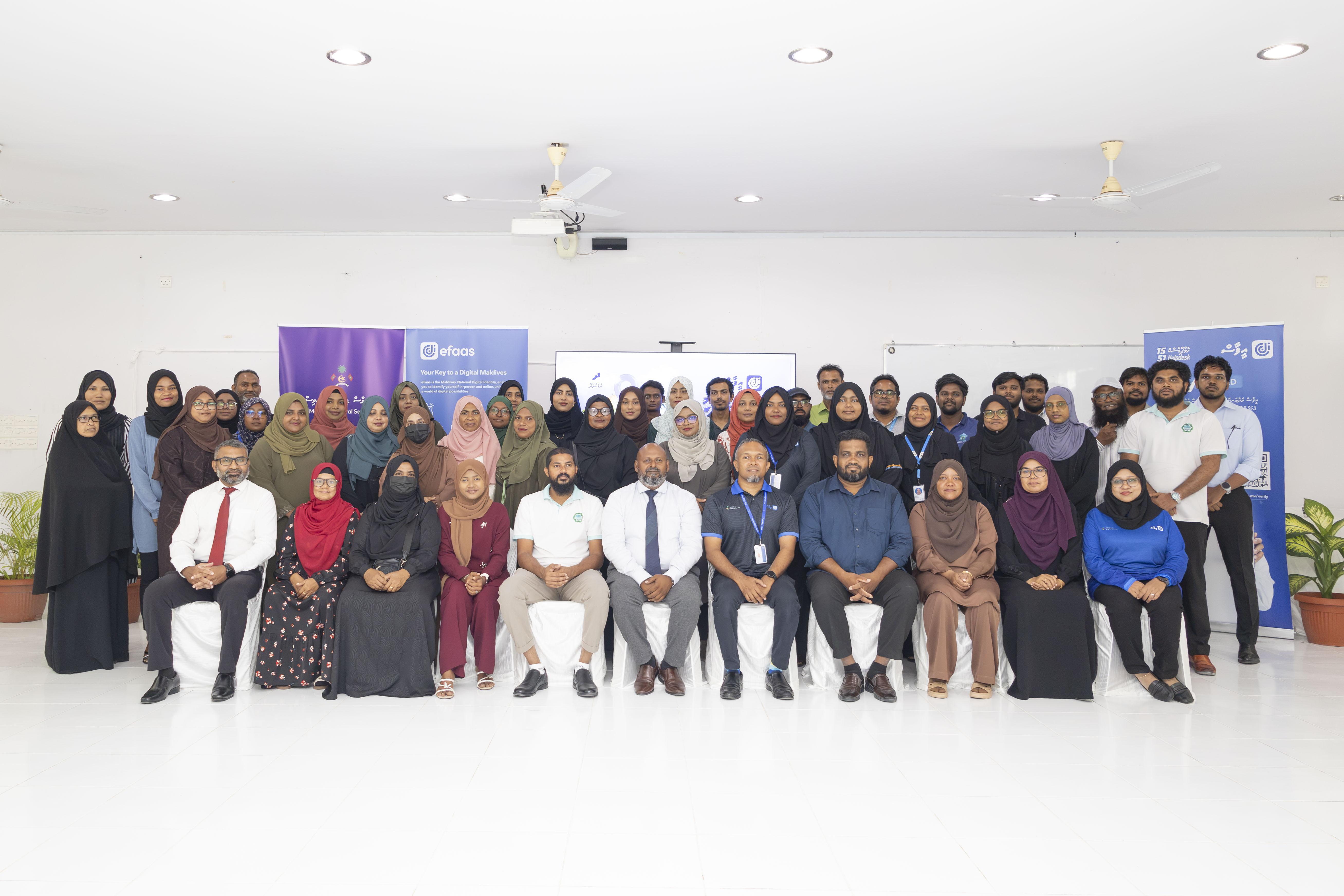
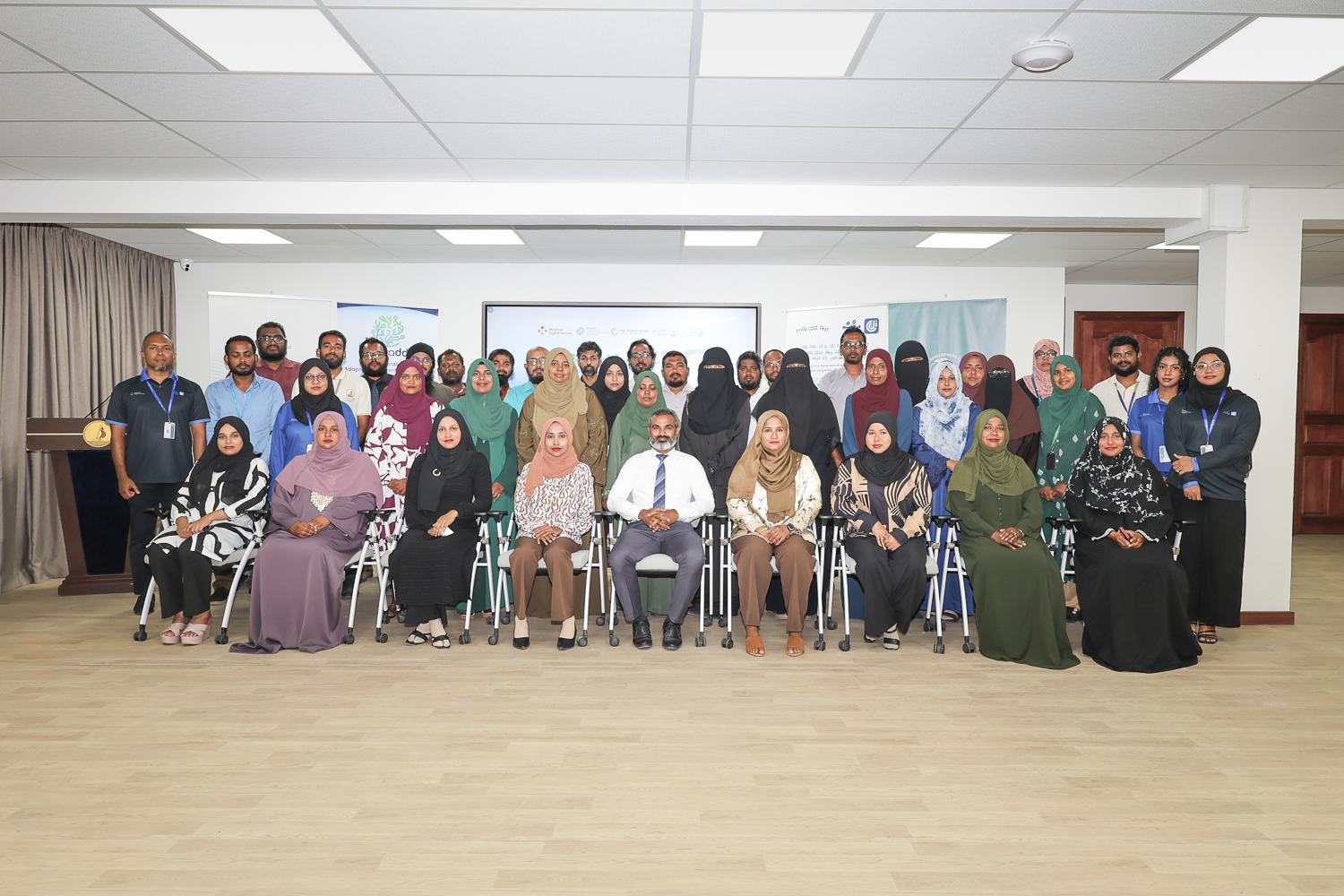
World Bank Supervision Mission: National Centre for Information Technology
22 October 2025

The visiting World Bank mission met
with the National Centre for Information Technology (NCIT) on 21st
October 2025, to review progress on key components of the D’MADD Project.
Discussions focused on realigning the project with the digital governance
reforms, infrastructure upgrades, and legislative priorities critical to
advancing the Maldives’ digital transformation agenda.
The meeting was attended by Mr. Jerome Bezzina
and Ms. Anna Zita Metz, Co-Task Team Leaders from the World Bank. Dr. Mohamed
Kinaanath (Minister of State for Homeland Security and Technology), Mr. Abdulla
Hussain (Deputy Minister), Mr. Hussain Naushad (Senior GDS Specialist), Ms.
Shazra Mohamed Saeed (Project Manager for DDP), and Senior Software Engineers Mr.
Hany Naseer and Mr. Mohamed Aiman represented NCIT.
Dr. Ibrahim Waheed (Project Manager), Mr. Ahmed
Haleem (Communications Specialist) and Ms. Fathmath Shafa Hussain (Project
Officer) participated from the D’MADD PMU team.
Dr. Kinaanath confirmed that the draft Digital
ID Bill and the Maldives Digital Service (MDS) Bill had been submitted to the
Attorney General’s Office, marking an important step toward institutional
reform. The team agreed
that while restructuring activities for NCIT are well underway, the allocated
funds under the Financing Agreement could be redirected toward capacity
building, public consultations, and benchmarking exercises to strengthen NCIT’s
expanded mandate.


The World Bank team emphasized the importance
of aligning these efforts with international best practices and proposed
revising the Terms of Reference to reflect the current reform stage. It was
agreed that training and exposure to global models would be prioritized to
ensure sustainability.
Under Component 1.2, updates included
completion of the meeting room setup and ongoing consultancy work for the SDWAN
activity. Proof of Concept faced challenges, prompting a shift to a two-stage
procurement process to improve transparency and participation. The Business
Continuity and Disaster Recovery Plan (BCDRP) has been finalized, with
recommendations focusing on digital transformation and data center
improvements. NCIT is exploring options for a national cloud and secondary data
center, supported by MoUs signed with international partners for digital
cooperation.
The discussion also re-addressed the Data
Protection Bill, which remains pending in Parliament. The team noted that
timely submission is critical to avoid funding reallocation and safeguard
project objectives. The bill’s passage will enable progress on activities such
as the Toolkit development and the Digital ID system, which includes hardware
procurement for the National Data Center and consent platform integration.
On data sharing and interoperability, NCIT
proposed leveraging the Climate Data Platform (CDP) as the foundation for a
National Data Exchange, minimizing duplication and optimizing resources. The group agreed to adopt
this approach, ensuring scalability and cost efficiency while maintaining
compliance with data protection requirements.
Finally, updates on the eFaas program were
shared, with version 2.0 scheduled for early 2026 and version 3.0 in Q1 2026.
Enhancements include improved user interfaces and accessibility features for
vulnerable users, aligning with the Digital ID framework.
The meeting concluded with a shared commitment
to accelerating legislative processes, strengthening institutional capacity,
and advancing digital infrastructure to achieve the Maldives’ long-term digital
transformation goals.
An additional meeting for NCIT was held on 22nd
October to present the details of the Maldives 2.0 and e-Faas version 3.0. The
presentation was conducted by Mr. Mohamed Nasru (Senior Software Engineer) and
Dr. Mohamed Kinaanath.