The D’MADD project successfully completes the Pilot Project with PAM technology for coral reef restoration
22 September 2025
The pilot project applying Passive Acoustic Monitoring (PAM) technology for coral
reef restoration has been completed. The pilot project commenced on 8th
April 2025 under the Subcomponent 3.2, leveraging digital technologies and
tools for climate adaption.
The project was carried out by
led by experts from Ocean World of Sound in collaboration with Environmental
Regulatory Authority (ERA [formerly Environmental Protection Agency (EPA)]) and
other partners, which marked the first use of PAM for reef monitoring in the Maldives.
The pilot project aimed to
establish a baseline, while building local capacity for ongoing reef health
monitoring. This technology enables continuous, non-invasive data collection on
reef soundscapes, offering new insights into ecosystem dynamics.

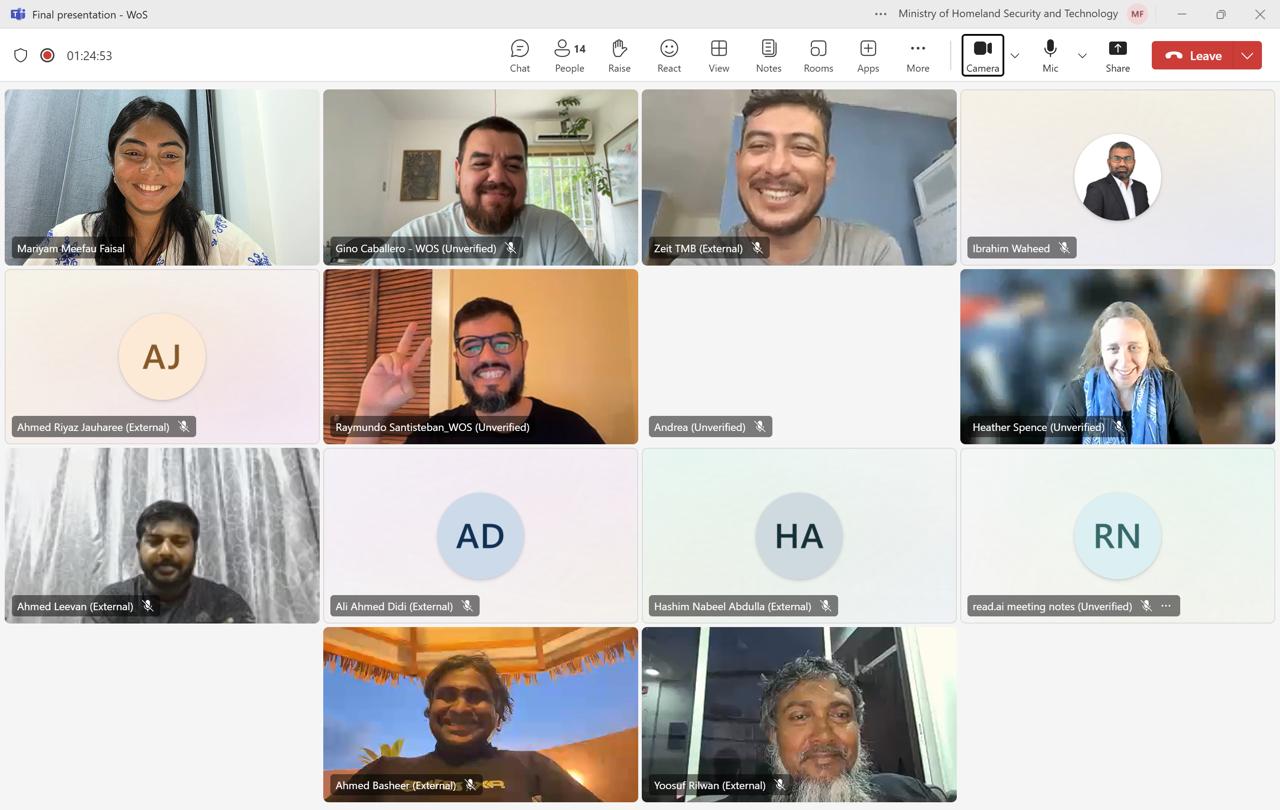
During the final presentation of
findings, stakeholders highlighted the project’s success in training government
staff, involving university students, and fostering inter-agency collaboration.
The data collected revealed valuable ecological information and demonstrated
the potential of PAM to support long-term reef restoration and conservation in
the Maldives.
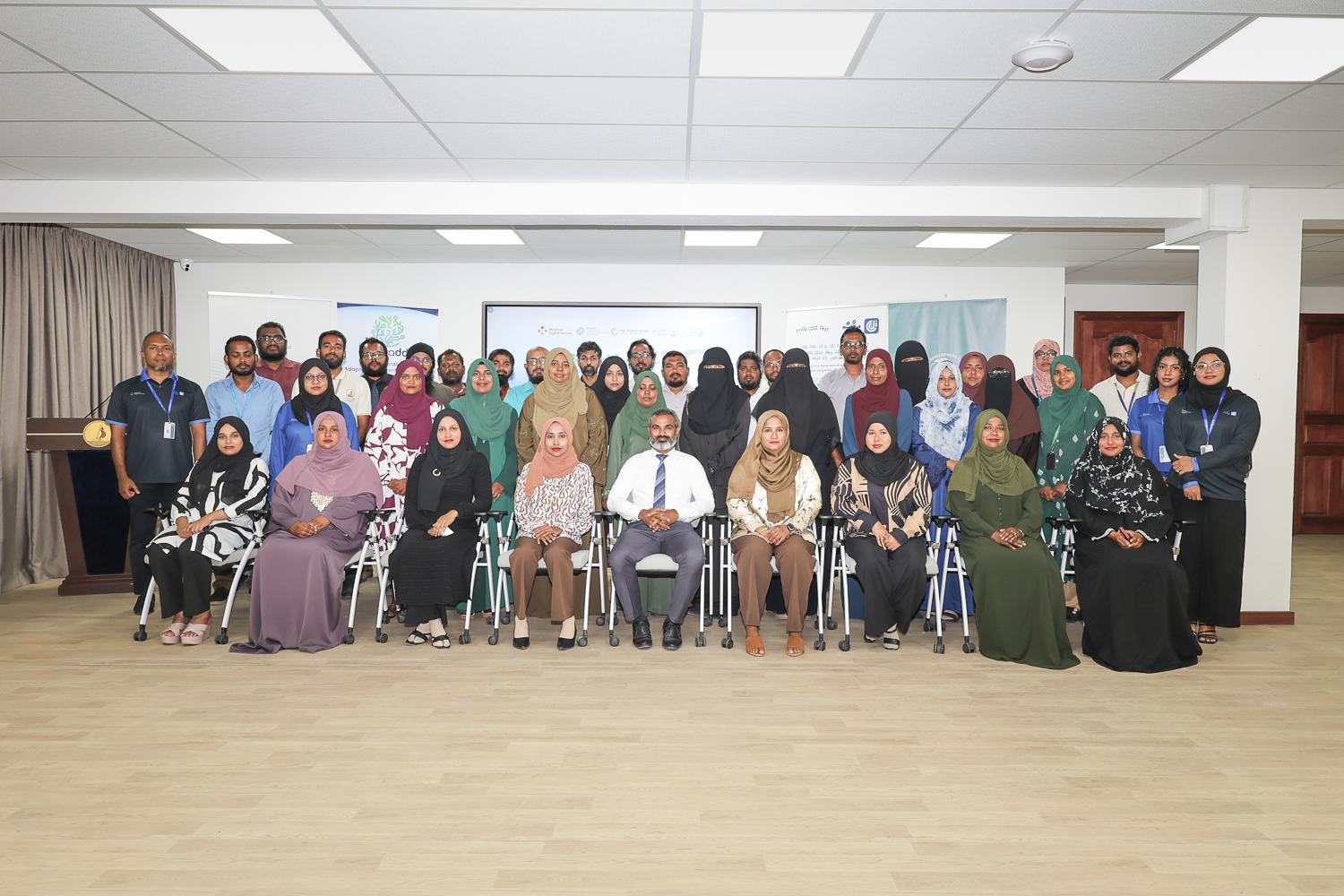
During the pilot program, which
was held from 7th April to 30th May 2025, 22 participants were given the
opportunity to join the training. 17 participants completed the training program of 24 hours,
which was conducted over 4 weeks with in-class theory sessions and field
practice. Participants include ten officials from the Environment Protection Agency,
two officials from the Maldives Marine Research Institute, three students from
the Maldives National University and two marine biologists from the civil
society organisations.
Participants, including
representatives from ERA and Maldives National University, expressed enthusiasm
for expanding the use of PAM across the Maldives and exploring applications
beyond reefs, such as seabird monitoring.
Project partners emphasized that
while the pilot has concluded, collaboration and knowledge-sharing will
continue, with opportunities for follow-up research and scaling up efforts
nationwide.